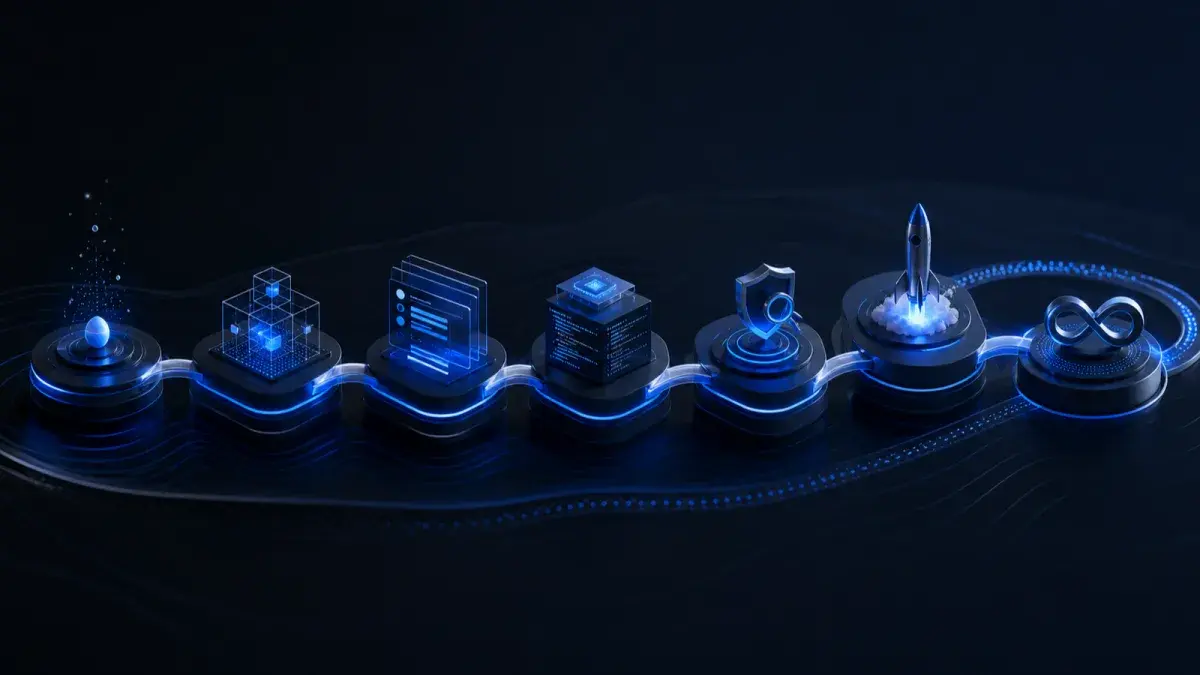

A sustainable custom software product is not created through coding alone. Strong outcomes depend on understanding the business need, making deliberate technical decisions and continuing to improve the product after launch.
Discovery and planning
The process begins by examining business goals, user roles, current tools and operational bottlenecks. Working from real workflows instead of assumptions reduces scope errors and reveals the requirements that create measurable value.
These findings are translated into a product scope, prioritized modules, technical requirements and a transparent delivery roadmap.
Design, development and quality assurance
User experience design defines the screens and flows needed for efficient daily use. The approved solution is then developed incrementally on a secure, performant and scalable architecture.
Quality assurance covers functionality, authorization, data integrity, responsive behavior, performance and failure scenarios. Regular reviews allow feedback to shape the product before late changes become expensive.
Launch and continuous support
Deployment includes controlled environment configuration, data migration, backups, monitoring and access management. Teams also receive the documentation and guidance required for adoption.
Launch is not the end of the product lifecycle. Maintenance, optimization and new capabilities should be planned from actual usage and changing business needs.
A process built around clear milestones reduces technical risk and makes the software investment more predictable for every stakeholder.